Supporting Peonies from Bud to Bloom
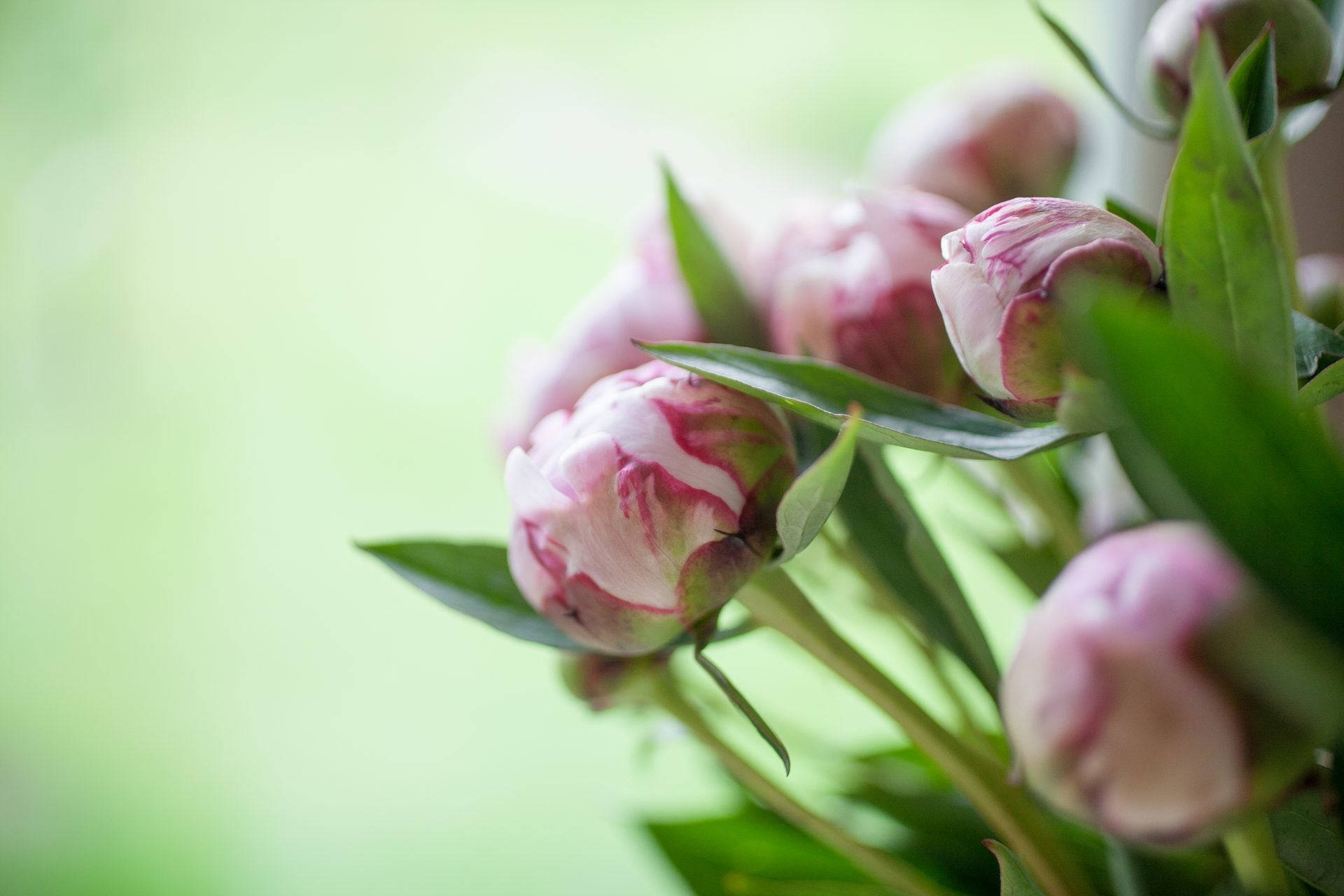
If you’ve ever treated yourself to a peony bouquet, you’ll probably recognise this feeling, I certainly do. You open the box expecting soft, ruffled peony flowers, only to find what looks like a bunch of small, green marbles staring back at you. And then… nothing happens. Days pass, and your peonies not blooming can feel a little disappointing. It can be confusing and leave you questioning how to care for peonies properly.
The good news is that this is completely normal. Most peony flowers are delivered in a tight, closed state to protect them in transit. Those delicate petals we all love are surprisingly fragile, so keeping each peony flower tucked up like a bud helps prevent bruising and extends their vase life. Your goal now is to wake them up.
From my experience, caring for a peony at this stage is actually quite simple. Getting it right just takes a little attention to water, temperature, and a gentle touch. With the right peony support, even the most reluctant stems will start to open, turning your bouquet into the full display you’ve been waiting for.
Why a Fresh 45-Degree Cut is Non-Negotiable
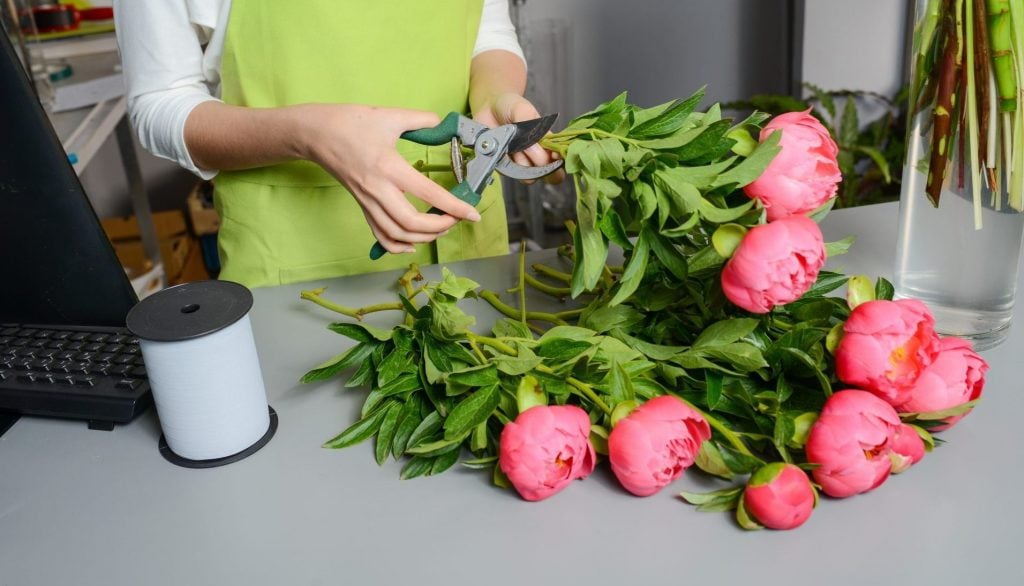
One thing I’ve learned with peonies is that trimming the stems isn’t optional. When a peony flower is first cut, the stem naturally seals itself to hold onto moisture. While it’s a clever survival trick during transit, it’s not so great once your peonies arrive at home. A fresh cut reopens that channel, allowing hydration to move freely up the stem into the petals, helping your buds soften and bloom.
Before you make that cut, take a moment to prep the stems. While the foliage might look lovely, these lower leaves actually compete for hydration and can quickly rot. This creates bacteria that can clog the stems all over again. I always start by removing any leaves that would sit below the waterline. It keeps the water clean and ensures the focus stays on supporting peonies.
When you’re ready, use sharp kitchen scissors to remove at least 2cm from each stem at a 45-degree angle. This angled cut doesn’t just increase the surface area for drinking, it also prevents the stem from sitting flat against the bottom of the vase, which can restrict water flow.
Once you’ve made that cut, get your peonies into water straight away. Leaving them out, even briefly, can allow air bubbles to enter the stem and block the flow you’ve just restored. It’s a simple process, but in my experience, it’s one of the most effective ways to support peonies and encourage a beautifully flourished peony bouquet.
‘Springtime Simulation’: Using Warmth to Wake Your Peonies
If you place freshly cut peonies into cold water, you’re effectively slowing everything down. To encourage faster blooms, I use lukewarm water to mimic a warm spring day during peony season.
This gentle warmth helps water move more efficiently up the stem, so your peony flowers can soften and unfold. It’s best to keep it just slightly warm; anything too hot can damage the stems and cause your peony bouquet to wilt instead.
A little humidity can help too. I’ve found that keeping peonies in a more humid space, like a bathroom, for a few hours, can help peonies open fully.
The Marshmallow Test: Is Your Peony Ready to Pop or Stuck in the ‘Marble’ Stage?
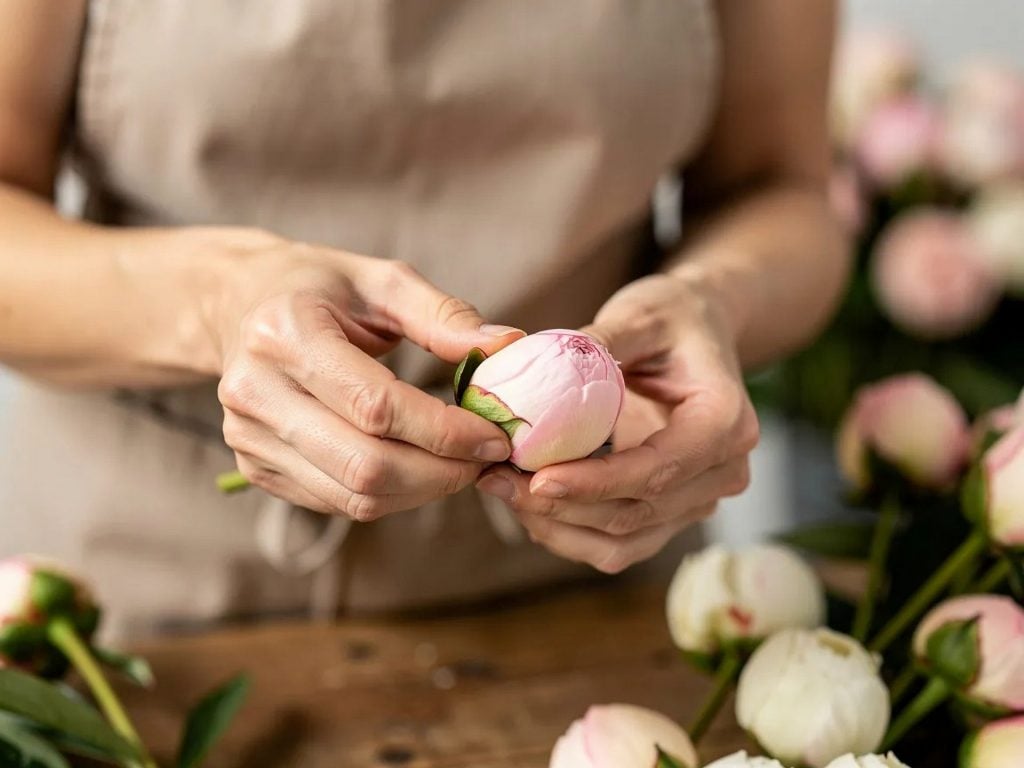
When I’m not sure if my peonies are ready, I use the “Marshmallow Test.”
Gently squeeze the head of the peony flower between your fingers. If it feels hard like a marble, it’s likely been cut too early and may struggle to open without extra help. But if it has a soft, springy feel, like a marshmallow, that’s a great sign your peony flowers are ready to blossom.
This simple check helps you understand whether your peonies are not blooming because they need more time or just a bit of warmth to get going. In many cases, they’re simply waiting for the right conditions to open up into a beautiful peony bouquet.
The ‘Honey Trap’: Freeing Your Peony Petals from Sticky Sap
Sometimes, even when your peonies pass the squeeze test, they still fail to open. If this is the case, they might actually be glued shut. Peonies naturally produce a sticky nectar that seals the bud while it develops. In the garden, ants happily feast on this sugar, but with peonies in a bouquet, you’ve got to step in.
A shiny, slightly sticky bud or sepals that seem tightly sealed are good signs that hardened sap is holding everything shut.
The fix is easy. Hold the peony flower upside down and dip the bud into lukewarm water, gently swirling it for around 10-15 seconds. This helps dissolve the sugar without damaging the petals. I’ll usually give the bud a very light massage with my thumb as well, just to help loosen things up. It’s a small step, but it can make a big difference.
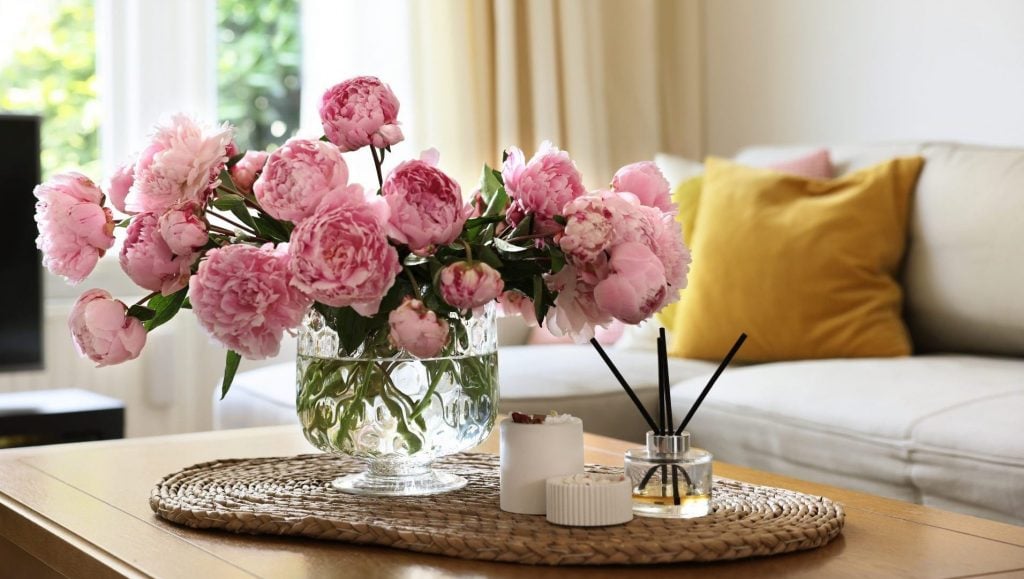
From First Bloom to Lasting Beauty
Once your peonies have opened, the focus shifts to ensuring they last as long as possible, and a few small tweaks can really extend the life of your peony bouquet.
Light & Temperature
While using warmth helps to open your peony flowers, cool air is what keeps them fresh. I tend to move my peonies to a spot that gets bright, indirect light but stays physically cool. Too much heat, especially on a windowsill, can cause them to open too quickly and fade just as fast.
Placement
This one often catches people out. Keeping your peonies near a fruit bowl might look nice, but fruits like apples and bananas release ethylene gas, which speeds up ageing. I’ve learnt to keep my peony flowers well away from the kitchen fruit bowl.
Clean Water
Clear water is the lifeline of any cut flower. Peonies are thirsty flowers, and it doesn’t take long for the water to turn cloudy. When that happens, bacteria can build up and block the stems, stopping your peony flowers from staying hydrated.
While those little packets of powder from florists are helpful, a simple homemade mix works just as well:
- 1 tablespoon sugar: Provides the energy needed to keep petals vibrant.
- 1 teaspoon bleach: Kills the bacteria that clog the stems.
- 1 teaspoon lemon juice: Balances acidity (pH) and helps water travel up the stem.
Supporting peonies with these simple steps keeps your bouquet looking its best for longer and is an essential part of peony care.
Once your peonies have fully opened, you might start thinking about how to arrange them or what they symbolise. If that’s you, you might enjoy exploring peonies and their meaning.
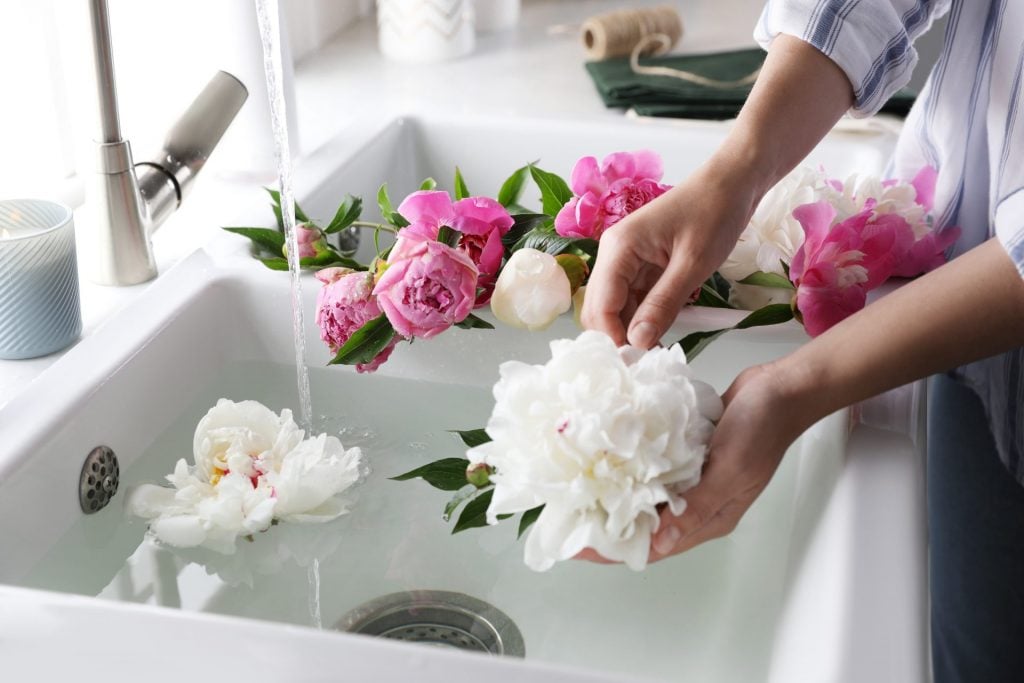
How to Revive a Wilted Peony
Peonies are a little different from woody-stemmed flowers; they rely entirely on water pressure to hold up their heavy flowers. When they start drooping, it’s usually a sign of thirst, often caused by a tiny air bubble blocking the stem.
To revive a wilting peony, I immerse the whole stem, flower head and all, in cool water for about 30 minutes. This total soak rehydrates the petals and stem, restoring the plant’s stability.
Once the stem feels firm, I give it a fresh diagonal cut while it’s still underwater to prevent any air from re-entering. This simple trick works wonders for early wilting, but it’s important to remember that peonies are naturally fleeting wonders. Even with the best care, their vase life is shorter than most other flowers, usually lasting 5-7 days. If a stem starts to droop after day five, it’s likely just finished its beautiful journey.
If you’re not quite ready to say goodbye, there are ways to preserve your peonies and keep their beauty for longer.